ICT Flow
ICT FLOW
TRADING EDUCATION
Home|Trading Foundations|Courses|Glossary|Dashboard|
Start Free
What Is ICT Trading? The Complete Beginner's Guide to Inner Circle Trader
Beginner14 min readMarch 15, 2026

What Is ICT Trading? The Complete Beginner's Guide to Inner Circle Trader

ICT trading is a methodology built on how institutions actually move markets. This guide covers everything — from the core philosophy to the key concepts — giving you a complete foundation before you study anything else.

ICT — Inner Circle Trader — is a trading methodology that teaches you to see markets the way banks and hedge funds see them. Not through indicators. Not through patterns. Through the lens of liquidity, institutional order flow, and price delivery algorithms that drive every move you see on any chart.

The Core Philosophy: Markets Are Not Random

The most important thing to understand about ICT methodology is the foundational premise: markets are not random. Every price movement serves a purpose. Every spike, every reversal, every consolidation is part of a deliberate delivery process orchestrated by the institutions — banks, hedge funds, central banks, and algorithmic trading systems — that control the vast majority of market volume.

Retail traders lose consistently not because they lack intelligence or discipline, but because they operate with a fundamentally flawed model of how markets work. They use lagging indicators designed to describe what already happened. They chase patterns that work sometimes but fail without explanation. They set stop losses at obvious levels that institutions specifically target. ICT methodology corrects all of this by teaching you to understand the actual mechanics of price delivery.

Who Created ICT and Why Does It Matter?

Michael J. Huddleston, known online as "ICT" or "The Inner Circle Trader," began sharing his methodology publicly in the early 2010s on trading forums and eventually YouTube. Over more than a decade, he built one of the most comprehensive free trading education libraries in the world — thousands of hours of content covering every aspect of institutional price delivery.

What makes ICT's work different from other trading educators is the depth and consistency of the framework. This is not a collection of random setups. It is a cohesive system built on a single underlying theory: that price is delivered algorithmically to hunt liquidity, fill institutional orders, and create imbalances that it must later return to reprice.

The Five Pillars of ICT Methodology

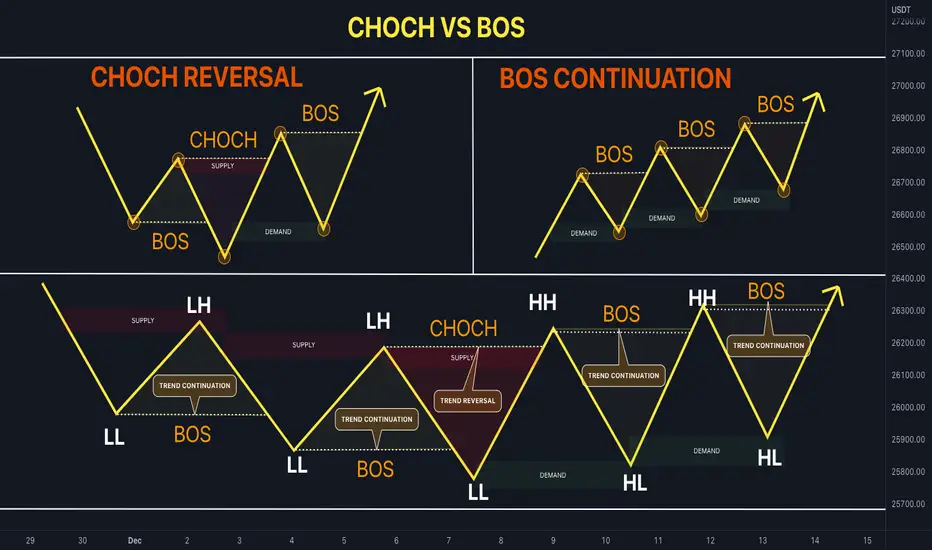
  • diamondMarket Structure — The framework of highs and lows that defines trend direction and signals when direction is shifting. ICT structure goes far deeper than basic higher highs and lower lows, incorporating concepts like Change of Character, Break of Structure, and the difference between short-term, intermediate-term, and long-term structural highs and lows.
  • diamondLiquidity — The engine of price movement. Banks cannot enter or exit large positions quietly — they need liquidity. This means they deliberately move price to areas where retail stop orders are clustered, triggering those stops to fill their own positions. Buy-side liquidity rests above swing highs. Sell-side liquidity rests below swing lows.
  • diamondFair Value Gaps — Price imbalances created when the algorithm moves so aggressively in one direction that price skips over a range without both sides participating fairly. These gaps act as magnets that price returns to fill, creating the most reliable entry zones in ICT trading.
  • diamondOrder Blocks — The specific price zone where institutional orders were placed immediately before a major move. When price returns to an order block, the same institutional orders that drove price away are still waiting to participate again, creating a powerful reaction zone.
  • diamondTime — Perhaps the most overlooked pillar. ICT teaches that price is delivered to specific targets at specific times. Killzones, macro time windows, and session timing are not coincidences — they are the schedule on which the algorithm operates.

How ICT Differs From Traditional Technical Analysis

Traditional technical analysis asks: "What does this pattern or indicator tell me about where price might go?" ICT asks a completely different question: "Where does the algorithm need to go to collect liquidity, and when will it get there?" This shift in perspective changes everything about how you read a chart.

Traditional traders draw support and resistance lines and wait for price to bounce or break. ICT traders understand that what looks like support is actually a liquidity pool filled with retail stop losses — and the algorithm will sweep those stops before reversing. What appears to be a breakout is often engineered manipulation designed to trap breakout traders before the real move occurs in the opposite direction.

The result is that ICT traders often take positions that feel counterintuitive to conventional technical analysis — selling into what looks like strength after a liquidity sweep, buying after what appears to be a breakdown. These setups work precisely because they are taking the other side of the retail herd.

The Interbank Price Delivery Algorithm (IPDA)

The Interbank Price Delivery Algorithm is the theoretical framework that underpins all of ICT methodology. The concept is that currency prices, indices, and commodities are not driven by pure supply and demand from retail participants — they are delivered algorithmically by a system designed to maintain liquidity in the financial markets while ensuring institutional orders are filled efficiently.

This algorithm operates on a schedule — moving price to collect liquidity during specific session windows, creating imbalances that define future draw targets, and cycling through accumulation, manipulation, and distribution phases on daily, weekly, and quarterly timeframes. Once you understand that price operates on a schedule rather than randomly, ICT concepts stop being theories and start being observable patterns that repeat across every market and every timeframe.

What ICT Trading Is NOT

ICT is not a holy grail. It is not a guaranteed system that produces winners every time. It is not about memorizing patterns and drawing boxes on a chart hoping for bounces. The traders who fail with ICT are those who learn the vocabulary without understanding the logic, who see the shapes without understanding why those shapes exist.

ICT is a framework for understanding market mechanics. Applied correctly, it gives you a significant probabilistic edge over the retail majority. Applied incorrectly, it is just another set of patterns that fail without explanation — because the practitioner never understood the underlying reason they work.

How to Learn ICT Correctly

The right learning sequence for ICT begins with market structure — understanding how price creates trends through sequential highs and lows and recognizing when that structure is shifting. From there, you build an understanding of liquidity — why price moves and where it is going. Then fair value gaps, order blocks, killzones, and session timing. Finally, you integrate everything into a top-down analytical framework and a defined entry model.

The most common mistake beginners make is jumping to entry models before understanding the foundation. Knowing what a Silver Bullet setup looks like means nothing if you cannot first identify the correct daily bias, the institutional order flow direction, and the draw on liquidity the trade is targeting.

The ICT Flow curriculum is built in the exact sequence ICT methodology requires — starting with market structure fundamentals and progressively building toward advanced concepts. Do not skip modules. Every concept builds on the one before it.

READY TO APPLY THIS?

14 free ICT modules. Structured learning. Zero fluff.

START LEARNING FREE
BACK TO BLOG
⚠️

RISK DISCLAIMER: Trading foreign exchange, indices, commodities, and other financial instruments involves substantial risk of loss and is not suitable for all investors. The high degree of leverage can work against you as well as for you. Before deciding to trade, you should carefully consider your investment objectives, level of experience, and risk appetite. The possibility exists that you could sustain a loss of some or all of your initial investment. ICT Flow provides educational content only — nothing on this platform constitutes financial advice, investment advice, or a recommendation to buy or sell any financial instrument. Past performance is not indicative of future results. Always seek independent financial advice if required.

ICT Flow
ICT FLOW
ACADEMY

Free ICT & Smart Money Concepts education. Trade like institutions.

© 2026 ICT FLOW
LEARN
Home
Trading Foundations
Courses
2022 Mentorship
ICT Glossary
TOOLS
Trade Journal
Dashboard
Daily Practice
Resources
LEGAL
Privacy Policy
Terms of Service
Cookie Policy
Affiliate Disclosure
FOR EDUCATIONAL PURPOSES ONLY · NOT FINANCIAL ADVICE
𝕏▶📱💬