ICT SMT Divergence: Comparing Correlated-Market Swings
Understand how ICT traders compare swing behavior in related instruments, choose consistent divergence rules and record continuation, reversal and no-trade outcomes without inferring market manipulation or true intent.
Framework note: ICT terms are interpretations of price action, not proof of institutional motives or a market algorithm’s intent. No setup is guaranteed. Test clearly defined rules, account for costs and slippage, and use risk limits before risking capital. Read our editorial policy.
SMT divergence is commonly described as comparing swing behavior in related instruments. A new high in one market that is not matched by another is an observable difference; it does not establish that institutional participants forced the move or reveal either market's intent.
The Logic Behind SMT Divergence
Correlated markets tend to move in tandem because the same macroeconomic forces and the same institutional participants influence them. EURUSD and GBPUSD are both European currencies versus the Dollar — they generally rise and fall together. NAS100 and SP500 are both US equity indices — they generally correlate strongly. XAUUSD and Silver tend to move together as precious metals.
A divergence can be logged when one instrument breaks a predefined swing and the other does not. It may be followed by continuation, reversal or no clear change; it is a hypothesis to test, not evidence that one market's buying is false or unsustainable.
Identifying SMT Divergence in Practice
- Bearish SMT: EURUSD makes a new swing high while GBPUSD makes a lower high at the same time — signal to expect EURUSD to reverse lower
- Bullish SMT: GBPUSD makes a new swing low while EURUSD makes a higher low at the same time — signal to expect GBPUSD to reverse higher
- Index SMT: NAS100 breaks a previous high while SP500 does not confirm — signal that the NAS100 high is engineered liquidity collection before a reversal
- The divergence must occur at a significant price level — ideally an OB, FVG, or major liquidity area on the HTF
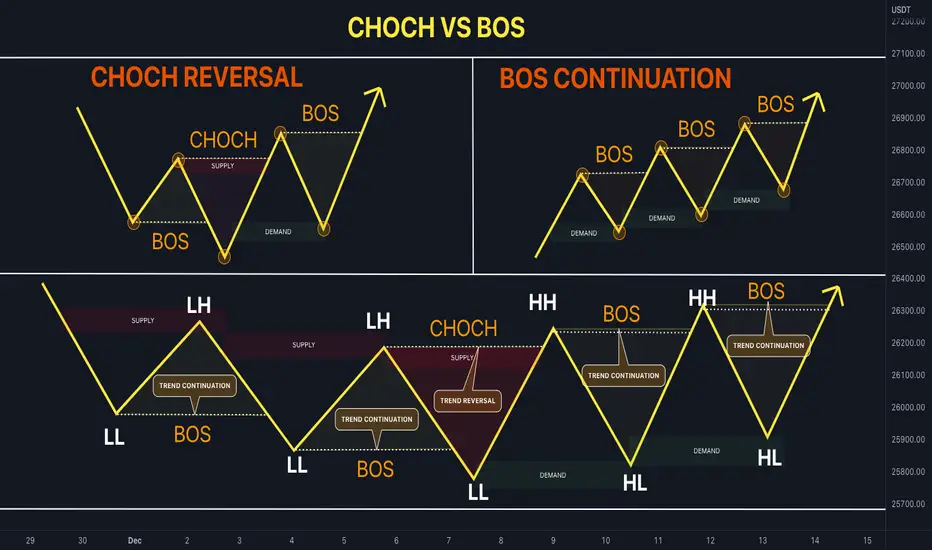
- LTF confirmation is essential — wait for a ChoCH on the 1-minute or 5-minute chart in the correlated pair that confirmed the divergence
SMT Divergence as Entry Confirmation
SMT Divergence is commonly discussed as a confirmation tool rather than a standalone signal. When your top-down analysis has already identified a bearish setup — the daily is bearish, you are at a premium zone with a bearish OB above, and the London Judas Swing has completed — adding SMT Divergence as the entry trigger gives you exceptional confidence.
A trader can add divergence to a written entry checklist after defining the instruments, swing rule and confirmation time. The condition does not prove that a high was engineered for institutional selling; measure outcomes including failures and no-trade cases.
SMT Divergence works best during killzone hours when institutional volume is present. A divergence during the Asian session low-volume period is less meaningful than the same pattern during the London or NY AM Killzone when institutional participation is at its peak.
Worked hypothetical example
Suppose two related equity indices are rising. One makes a marginal new swing high while the other stays below its prior swing high. An ICT trader might label this SMT divergence, then wait for a predefined structure break before considering a trade. The divergence itself is context; it does not name the next direction or prove manipulation.
Failure case and what to test
Correlation can change and the instruments may diverge for ordinary reasons, including different sector weights, news or trading hours. A chart comparison can look persuasive after the move but offer no useful signal in real time.
Test checklist
- Choose the instruments and swing-identification rule before reviewing.
- Define confirmation, invalidation and signal expiry in advance.
- Count reversals, continuations and ambiguous cases—not just successful examples.
RELATED READING
Continue with guides selected for overlapping concepts and practical context.