ICT Valid Pullback — How to Distinguish Real Retracements from Reversals
A practical way to define and review pullback candidates in ICT-style analysis, with explicit structure, invalidation and confirmation rules rather than relying on visual judgment alone.
Framework note: ICT terms are interpretations of price action, not proof of institutional motives or a market algorithm’s intent. No setup is guaranteed. Test clearly defined rules, account for costs and slippage, and use risk limits before risking capital. Read our editorial policy.
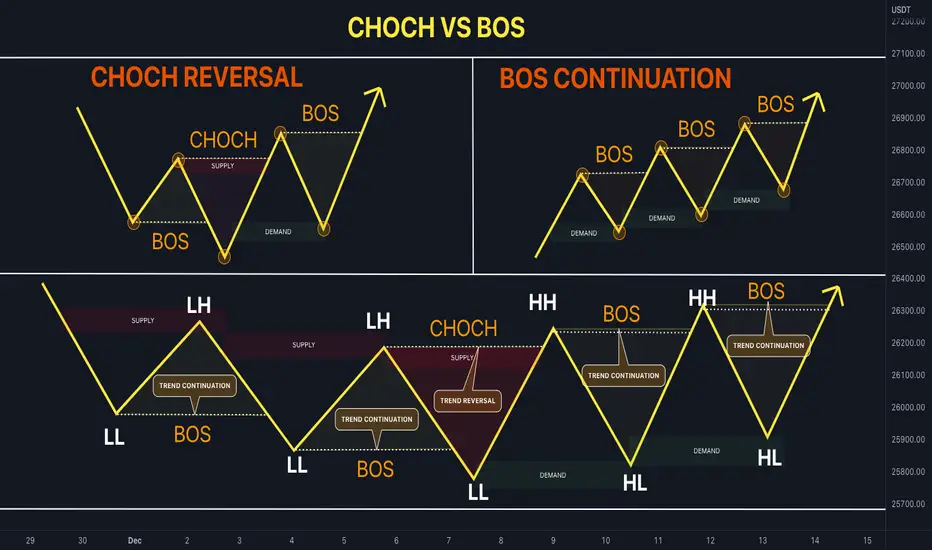
A valid pullback is one of the most important concepts for anyone using ICT methodology for trend-following entries. Almost every ICT entry model relies on buying or selling a pullback within the direction of the higher timeframe trend — but the challenge is distinguishing a valid pullback (a retracement that will resume the trend) from an invalid one (a deeper retracement or the beginning of a reversal). The ICT framework provides specific criteria that define the difference.
What Makes a Pullback Valid?
A valid pullback in ICT terms is a retracement into a recognized PD Array (Order Block, FVG, or OTE zone) within the discount zone (for a bullish trend) or premium zone (for a bearish trend), without breaking the structural integrity of the trend. Three conditions must all be true for a pullback to qualify as valid.
Condition One: the pullback must retrace into a legitimate PD Array. Not just "it pulled back 50%," but specifically into an OB, FVG, BPR, or OTE zone that has institutional significance. A pullback to a random 50% level with no PD Array present is not a valid ICT pullback — it is noise.
Condition Two: the PD Array must be in the correct premium/discount zone. For a bullish trend pullback entry, the OB or FVG must be below the 50% equilibrium of the current range (in discount). If the PD Array is in premium, waiting for a deeper pullback is the correct approach.
Condition Three: the higher timeframe structure has not been violated. The most recent significant Higher Low (in a bullish trend) must remain intact. If the pullback has already broken the most recent HL, it is no longer a valid pullback — it is a potential reversal (ChoCH), and new analysis is required.
Invalid Pullback Signals
- The pullback has broken the most recent significant swing low (bullish trend) — this is a ChoCH, not a valid pullback.
- The PD Array being retested has already been tested and mitigated in a previous pullback — a previously mitigated FVG is no longer valid for re-entry.
- The pullback is not reaching any PD Array — price is retracing through open space with no institutional zone to react from.
- The pullback is occurring against a major news event or during a low-liquidity period — the PD Array reaction may be disrupted by news flow rather than institutional order flow.
- The retracement is slow, overlapping, and corrective rather than sharp and impulsive — this suggests potential structural reversal rather than a healthy trend retracement.
The Valid Pullback Entry Template
The complete valid pullback entry: HTF bias confirmed bullish → price makes BOS (new HH) → pullback begins → pullback enters a discount OB or FVG → during a Killzone, a bullish MSS occurs on the 5-minute chart within the PD Array zone → enter long at the CE of the 5-minute FVG created by the MSS displacement → stop below the PD Array → target the next BSL (the new swing high or equal highs above).
The discipline to only trade valid pullbacks — and to sit on your hands during invalid ones — is the skill that separates profitable ICT traders from struggling ones. Most losing ICT traders do not have a structural problem with their analysis; they have a patience problem. They enter pullbacks before they reach the valid PD Array, or they enter pullbacks that have already violated the trend structure. Wait for the PD Array. Wait for the discount context. Wait for the Killzone. The valid pullback always comes eventually — and when it does, it is worth the wait.
Worked hypothetical example
Suppose price breaks a previously marked swing high and then retraces toward a preselected imbalance area. Under the trader’s plan, this is only a pullback candidate until price meets a written confirmation rule. If price instead breaks the swing used for invalidation, the setup is recorded as failed.
Failure case and what to test
Terms such as shallow, deep or valid can be subjective unless the relevant swing, retracement zone and confirmation are fixed in advance. A retracement may continue into a larger reversal or may never reach the chosen area.
Test checklist
- Choose the impulse swing and invalidation point before the retracement.
- Define the confirmation needed to turn a candidate into a setup.
- Track missed entries, invalidations and no-touch cases alongside winners.
RELATED READING
Continue with guides selected for overlapping concepts and practical context.