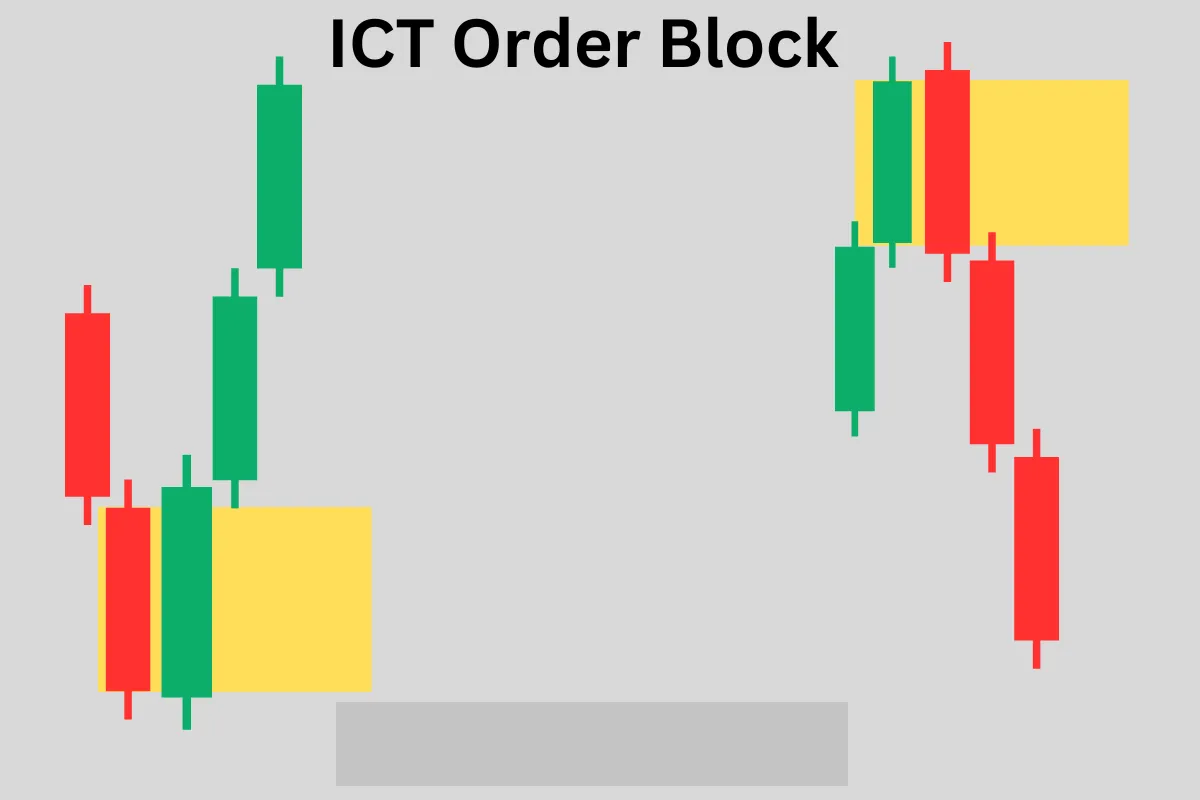
ICT Unicorn Model: Defining Mitigation and FVG Overlap
Explore the Unicorn label as a combination of mitigation-block and Fair Value Gap ideas, define the overlap consistently, and test all outcomes rather than assuming two chart labels imply a stronger edge.
Framework note: ICT terms are interpretations of price action, not proof of institutional motives or a market algorithm’s intent. No setup is guaranteed. Test clearly defined rules, account for costs and slippage, and use risk limits before risking capital. Read our editorial policy.
The Unicorn label in ICT education commonly combines a mitigation-block idea with an overlapping Fair Value Gap. The overlap can be defined from visible candle geometry, but it does not prove two independent signals or guarantee a high-conviction entry.
The Two Components of a Unicorn
Component One is the Mitigation Block. Recall that a Mitigation Block is a failed Order Block — an OB that was broken rather than respected. The break of an OB signifies that the smart money used that zone to offload positions rather than add to them. The zone now represents a level where institutions are positioned in the new direction, waiting for price to return so they can add more.
Component Two is a Fair Value Gap that forms within the same zone. When the price displacement that created the Mitigation Block also left a Fair Value Gap at approximately the same price level, you have the Unicorn — both a structural element (the Mitigation Block) and a price imbalance (the FVG) at the same location. The convergence of these two signals at one level represents the maximum concentration of institutional interest.
How the Unicorn Forms — The Sequence
- Step 1: An Order Block forms — identify the last bullish candle before a bearish impulse (for a bearish Unicorn), or last bearish candle before bullish impulse (bullish Unicorn).
- Step 2: Price returns to the OB and breaks through it rather than respecting it. The OB has now failed — it is a Mitigation Block.
- Step 3: The displacement that broke through the OB leaves a Fair Value Gap. This FVG overlaps with or is very close to the Mitigation Block zone.
- Step 4: Price pulls back to the level. It is now entering both the Mitigation Block and the FVG simultaneously. This is the Unicorn entry zone.
- Step 5: Enter at the CE of the FVG within the Mitigation Block. Stop beyond the outer edge of the combined zone. Target: next liquidity pool.
Why the Unicorn Is High Probability
The Unicorn is powerful precisely because it requires two independent confirming signals. A lone FVG has a certain probability of holding. A lone Mitigation Block has a certain probability of holding. When both occupy the same price zone simultaneously, the probability is not simply additive — it is multiplicative in terms of institutional interest concentrated at that level.
Think of it this way: the FVG says "there is a price imbalance here that needs to be filled." The Mitigation Block says "there are institutional orders waiting here from a previous failed OB." When price enters the zone, both types of institutional interest activate simultaneously — generating a sharper, more sustained reaction than either element would produce alone.
Identifying Unicorn Setups on Your Chart
Unicorn setups occur on every timeframe, but the most tradeable ones appear on the 15-minute and 1-hour charts during Killzone periods. To find them, start by marking all your Order Blocks on the chart. Monitor which ones fail — those become Mitigation Blocks. Then check whether the displacement that broke the OB also created a Fair Value Gap that overlaps with the Mitigation Block zone. When you find an overlap, mark it as a potential Unicorn.
Not every Mitigation Block will have an overlapping FVG. Perhaps 20-30% of Mitigation Blocks will qualify as Unicorns. When one does, prioritize it above all other entry zones on that timeframe — it is the confluence-based setup available.
The Unicorn Model is a patience trade. These setups do not appear every session. When you find one that aligns with your HTF bias during a Killzone, trade it with full conviction and appropriate position sizing. Missing a Unicorn is far less damaging than forcing trades that do not qualify.
Worked hypothetical example
A trader marks a candidate mitigation area and a nearby FVG under a predefined source definition. Price revisits the area, but the required overlap is absent, so the setup is rejected. On another chart, both conditions are present, and it is logged for testing with the same stop and confirmation rules as every other qualifying case.
Failure case and what to test
If the definition of a mitigation block or the required FVG alignment changes from chart to chart, the combination can be fitted to past winners. Two labels appearing together do not automatically provide independent confirmation.
Test checklist
- Define each component and the exact required overlap.
- Log candidates that meet only one of the two conditions.
- Compare the combined rule with each component tested alone.
RELATED READING
Continue with guides selected for overlapping concepts and practical context.