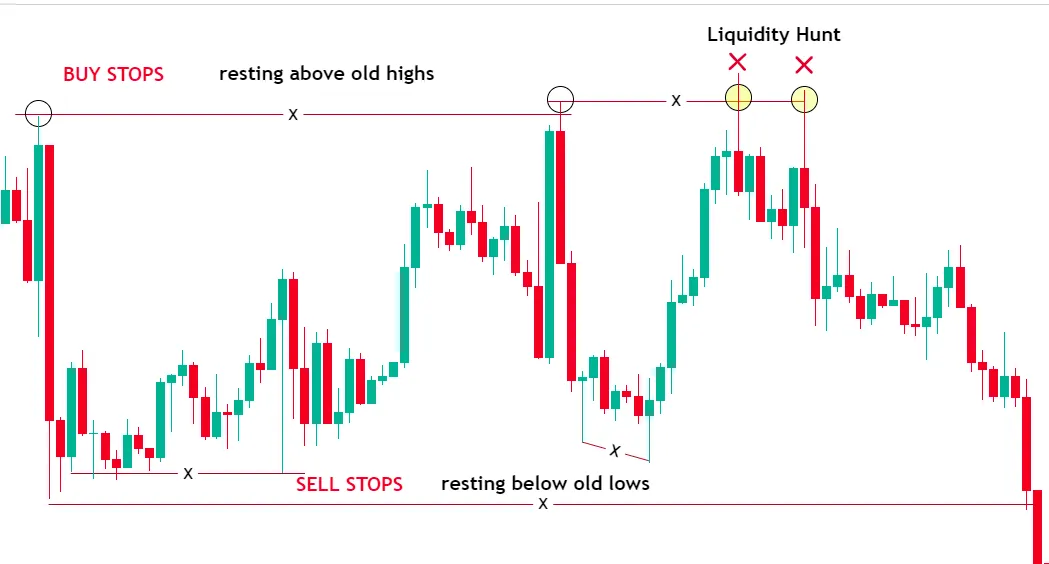
ICT Turtle Soup: Defining Sweep-and-Return Conditions
Review the Turtle Soup label as a possible move beyond a prior swing followed by a return, define confirmation and invalidation, and test every qualifying case without assuming stops were deliberately hunted.
Framework note: ICT terms are interpretations of price action, not proof of institutional motives or a market algorithm’s intent. No setup is guaranteed. Test clearly defined rules, account for costs and slippage, and use risk limits before risking capital. Read our editorial policy.
The ICT Turtle Soup strategy is named after the classic Turtle Trading system — because it does exactly the opposite. Where Turtle Traders buy breakouts to new highs and sell breakdowns to new lows, ICT Turtle Soup fades those same breakouts, entering in the opposite direction after the false break. It is a strategy built on one fundamental truth: the majority of apparent breakouts are engineered stop hunts.
The Foundation: Why Breakouts Fail
Traders sometimes hypothesize that stops or breakout orders cluster around widely watched swing levels. A chart does not reveal the actual number, ownership or current status of orders at those prices, so treat the level as a reference rather than a verified order map.
A break above a swing high can continue higher or return below the level. Candles alone cannot show whether an algorithm was trying to trigger stops or fill a position; define the sweep-and-return condition before reviewing examples.
Turtle Soup Setup Criteria
- Identify a clear swing high or swing low that has held for at least 3-5 bars — the longer it holds, the more stop orders have accumulated above/below it
- Wait for price to break above the swing high (for a bearish Turtle Soup) or below the swing low (for a bullish Turtle Soup)
- The break must be decisive — a clear sweep of the level, not just a test. Price should close beyond the level on the timeframe you are analyzing
- Look for the sweep to occur during a Killzone (London or New York session opening) — sweeps during killzones are significantly more reliable than sweeps during low-volume periods
- After the sweep, watch for a sharp reversal — the displacement back inside the range confirms the sweep was manipulation, not genuine breakout
- Enter on the retracement into the first FVG or OB created by the reversal displacement
Bullish Turtle Soup — The Setup
Under one Turtle Soup rule, a candidate forms when price trades below a predefined swing low and subsequently closes back above it. This sequence is observable, but it does not prove every stop was triggered or guarantee that price will move higher.
For entry, mark the swing low that was swept. After the reversal back above it, wait for a pullback into the first 5-minute FVG that formed on the initial reversal candle. Enter long at the CE of that FVG, with a stop below the sweep candle's low. Target: the sell-side of the next liquidity pool above — typically the previous swing high or an equal high level.
Bearish Turtle Soup — The Setup
A Bearish Turtle Soup is the mirror image. Price sweeps above a notable swing high, trapping breakout buyers and triggering sell-stop orders above. The sweep is followed by an immediate rejection back below the swing high. The trapped buyers will exit as price falls, accelerating the bearish move.
Entry for the bearish Turtle Soup: after price reverses back below the swept swing high, wait for the first FVG to form on the reversal move. Sell into the CE of that FVG on the retracement. Stop above the sweep candle's high. Target: the buy-side liquidity pool below — the nearest swing low, equal lows, or the previous day's low.
Timeframes and Context
Turtle Soup setups work across all timeframes, but the commonly studied setups occur when the swept swing high or low is significant on a higher timeframe. A sweep of the previous week's high on the daily chart that forms a bearish Turtle Soup is far more powerful than a sweep of a random 5-minute swing high. The higher the timeframe significance of the swept level, the larger the accumulated liquidity, and the more powerful the reversal.
Critical rule: the reversal must be sharp and decisive. A genuine Turtle Soup reversal creates a large displacement candle immediately after the sweep. If price sweeps a level and then grinds back slowly, that is not a clean Turtle Soup — it may be a genuine breakout retesting the level. The violence of the rejection is confirmation of the liquidity sweep.
Worked hypothetical example: predefine a failed-break setup
Suppose the prior 20-bar high is 150.00. The trader requires price to trade at least 0.10 above that level and close back under 150.00 within two bars. A later short-term structure break is the entry trigger, with a stop above the sweep high. The setup is counted only when all conditions occur in order; a price touch alone is not enough.
Failure case and what to test
Price may stay above the old high or trigger the entry and then continue upward to the stop. Results can change with the lookback length, minimum overshoot, confirmation rule and holding period. The chart cannot prove the event was a deliberate stop hunt.
Test checklist
- Choose the reference high/low lookback and overshoot threshold.
- Write the close-back-inside and entry confirmation rules.
- Define stop placement, time exit and maximum risk.
- Count failed reversals and compare against a basic breakout baseline.
RELATED READING
Continue with guides selected for overlapping concepts and practical context.