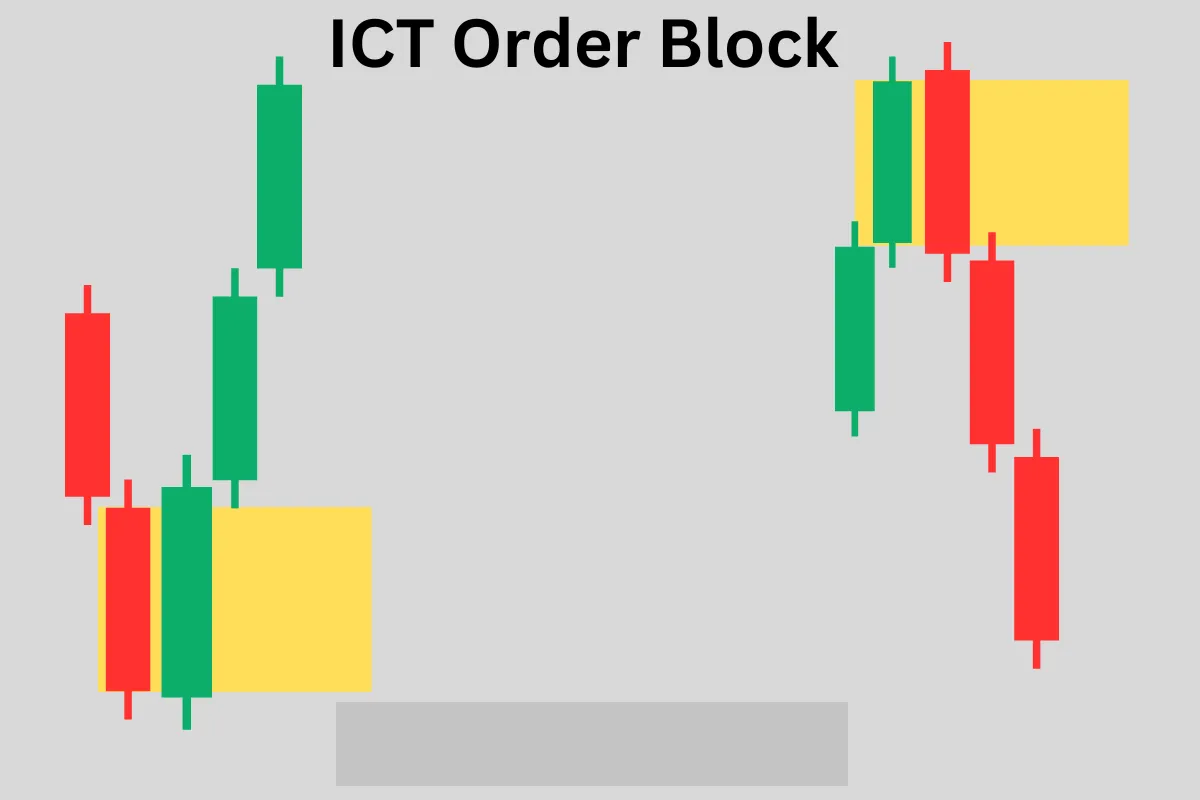
ICT Suspension Blocks: Candidate Zones and Retest Rules
Explore the Suspension Block label as used in some ICT material, define its candle/range boundaries and invalidation, and test later retests without treating the zone as verified institutional accumulation.
Framework note: ICT terms are interpretations of price action, not proof of institutional motives or a market algorithm’s intent. No setup is guaranteed. Test clearly defined rules, account for costs and slippage, and use risk limits before risking capital. Read our editorial policy.
Suspension Block is a label used in some ICT material for a tight-range price area before a directional move. Its name or introduction date does not establish that the area contained institutional orders or has predictive value.
What Is a Suspension Block?
A candidate can be defined as a narrow range followed by a move that meets a written displacement threshold. Specify the number of candles, range-size threshold and qualifying move before reviewing examples; a later strong move alone is not enough to validate the pattern retrospectively.
The term describes how the range appears on the chart. It does not demonstrate algorithmic accumulation or explain why the subsequent move occurred; compare candidate ranges with consolidations that do not produce a strong move.
Identifying a Suspension Block
- Look for a cluster of 3-7 candles with very small bodies and minimal wicks, all contained within an extremely tight range — the zone of suspension.
- Immediately following the suspension cluster, a powerful displacement move occurs — multiple large-bodied candles moving strongly in one direction.
- The suspension zone itself becomes the Suspension Block — a rectangular zone defined by the high and low of the tight-ranging cluster.
- The Suspension Block on the return of price acts as support (if the move after it was bullish) or resistance (if the move after it was bearish).
- The most valid Suspension Blocks form during accumulation periods — the Asian session, or during the pre-Killzone lull before the London or New York open.
Trading the Suspension Block
A trader may test a return to a premarked suspension-range candidate as one condition in an entry plan. It can fail or never be revisited, so define a separate trigger, stop, target and expiry rather than assuming a retest produces a reaction.
A midpoint limit entry is one possible rule to test, not a universal prescription. Specify whether the midpoint refers to the cluster's high-low range or candle bodies and account for spread, slippage, unfilled orders and invalidation.
Suspension Block vs Order Block — The Distinction
The key difference between a Suspension Block and a standard Order Block is the pre-move price action. An Order Block is identified by a single last-opposing candle before a move. A Suspension Block is identified by a cluster of tight-ranging candles before the move. The suspension indicates more deliberate, extended accumulation by smart money — which typically results in a more explosive move when it releases and a more reliable reaction when price returns.
The Suspension Block is particularly relevant on higher timeframes (4-hour and daily) where the tight clustering of candles before a major move is clearly visible. Once you identify a Suspension Block on the daily chart, mark it and watch for the return. These zones often produce some of the cleanest reactions in the entire PD Array hierarchy because the institutional position loading that created them was so deliberate.
Worked hypothetical example
For a hypothetical Suspension Block study, the trader writes down the exact candle sequence and boundaries from the educational source they follow, then marks examples without looking ahead. After the pattern forms, they record whether the stated confirmation appears and how price behaves around the candidate zone.
Failure case and what to test
Specialist terminology can have different definitions across educators, and a new label is not evidence of predictive value. Without a stable definition, a backtest cannot be replicated or compared across instruments.
Test checklist
- Record the chosen definition and avoid mixing variants.
- Mark candidates before subsequent candles form.
- Compare with simpler price-action rules and log cases that do not qualify.
RELATED READING
Continue with guides selected for overlapping concepts and practical context.