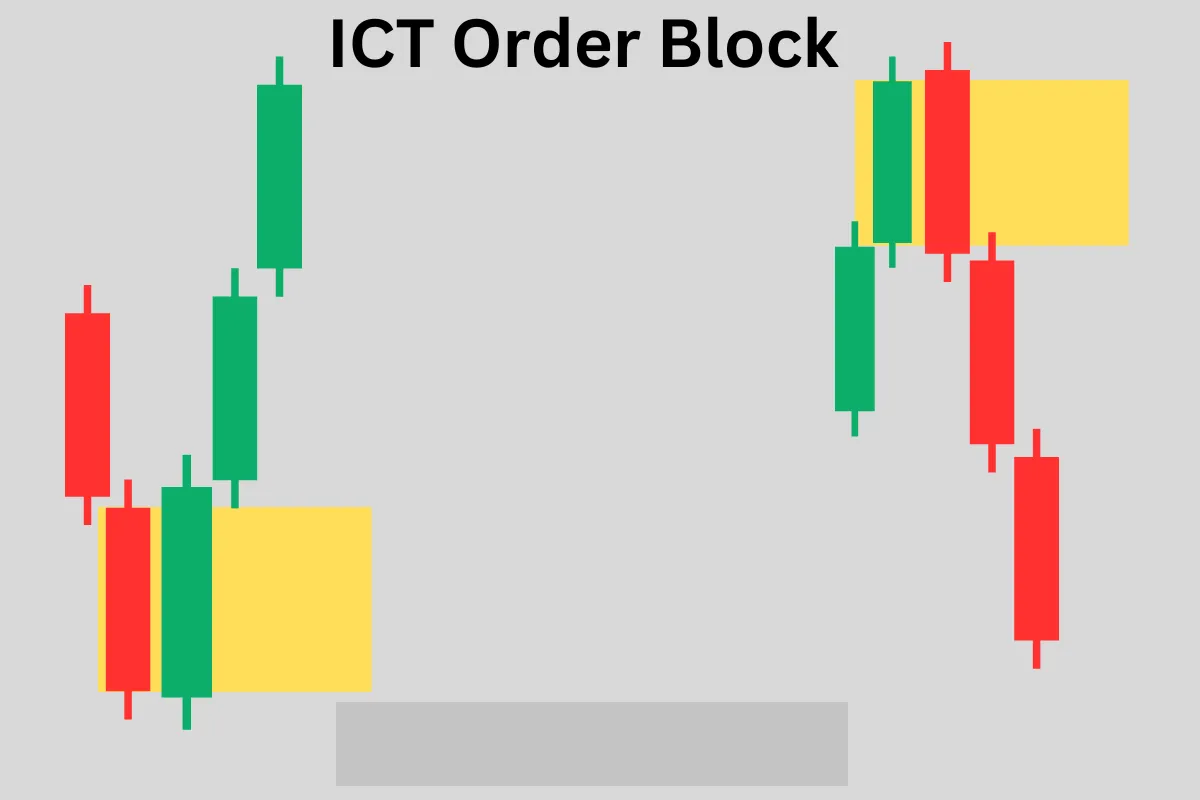
ICT Single Candle Order Block (SCOB) — When One Candle Changes Everything
The Single Candle Order Block is a specific OB identification where the entire institutional zone is contained within one candle. It is one of the most precise and reliable OB types for tight-stop, high-RR entries.
Framework note: ICT terms are interpretations of price action, not proof of institutional motives or a market algorithm’s intent. No setup is guaranteed. Test clearly defined rules, account for costs and slippage, and use risk limits before risking capital. Read our editorial policy.
The ICT Single Candle Order Block (SCOB) is a specific variant of the standard Order Block where the entire institutional zone is represented by a single candle — one clean, identifiable candle whose body defines the entire OB zone. Unlike multi-candle OB formations that can create ambiguity about which specific price level is the most significant, the SCOB is unambiguous: one candle, one zone, one entry level. This clarity makes it one of the most tradeable and consistent OB setups in ICT methodology.
What Makes an OB a Single Candle OB?
A standard Order Block may consist of the last one, two, or three opposing candles before a displacement. When the OB formation is reduced to a single candle — where that one candle clearly and completely identifies the institutional zone — it becomes an SCOB. The SCOB is characterized by a single candle with a clear body (open to close) that represents the full price range of the institutional order placement, followed immediately by a displacement move.
The commonly discussed SCOBs are formed by candles with relatively small wicks compared to the body — meaning the majority of the candle's range was the body (the actual trading range), not the wick (the rejection). A candle with 80%+ of its range as body and minimal wick is a premium SCOB because the entire body represents active institutional order placement at that price range.
SCOB vs Standard OB — The Precision Advantage
In a standard 3-candle OB sequence, you must decide which of the three candles is the OB itself, and which specific level within that candle is the entry. This introduces subjectivity. In an SCOB, there is no ambiguity: the single candle is the OB. The CE of the single candle body is the entry. The high of the body is the upper boundary; the low of the body is the lower boundary.
This precision allows for tighter stops. Because the entire OB zone is one candle body, the stop placement (just beyond the body) is typically tighter than a multi-candle OB stop, which must cover the full range of the multi-candle formation. Tighter stops + same targets = better risk-to-reward ratios from SCOB entries versus standard OB entries.
Trading the SCOB
- Identify the single candle that acted as the last opposing candle before the nearest displacement move.
- Confirm it is an SCOB: the OB zone is entirely contained within one candle, with a clear body and minimal conflicting structure.
- Mark the body high, body low, and body CE (midpoint between open and close).
- Set a limit order at the CE. Stop: beyond the body extreme (below body low for bullish SCOB, above body high for bearish SCOB).
- Target: the next liquidity pool in the direction of the post-SCOB displacement.
- Confirmation: after price enters the SCOB zone, watch the 1-minute or 5-minute for a reaction FVG within the SCOB body — enter at its CE for maximum precision.
When reviewing historical charts, specifically study days where price made a clean displacement from an SCOB. Note how tight the stop would have been versus the distance to the target. You will consistently find R:R ratios of 5:1 to 10:1 on clean SCOB setups — especially on the 15-minute and 1-hour timeframes where single-candle OBs that precede multi-hour displacement moves are common. The SCOB's precision is its greatest strength.
Worked hypothetical example
Suppose a trader's written SCOB rule requires a single candle whose body is at least 70% of its total range and whose close is followed by a predefined structure break. A candle that looks strong but fails the size or follow-through condition is excluded. The 70% threshold is an example for this hypothetical rule, not an official universal standard.
Failure case and what to test
Changing the body threshold or redefining the reference candle after observing later price will inflate apparent success. A large candle can occur during a news spike and still fail to create a useful entry.
Test checklist
- Choose the body-to-range threshold before backtesting.
- Separate the candle pattern from required confirmation and entry.
- Include failures, costs and no-retest examples in the sample.
RELATED READING
Continue with guides selected for overlapping concepts and practical context.