ICT Silver Bullet Strategy: Time Windows, Entry Rules and Risk
A structured overview of the Silver Bullet framework, its commonly discussed session windows and how to document entry conditions, invalidation and risk without assuming an edge.
Framework note: ICT terms are interpretations of price action, not proof of institutional motives or a market algorithm’s intent. No setup is guaranteed. Test clearly defined rules, account for costs and slippage, and use risk limits before risking capital. Read our editorial policy.
The ICT Silver Bullet is a time-based entry model that operates within three specific 60-minute windows each trading day. It is one of the most precise and repeatable setups in ICT methodology — not because it is complicated, but because it is completely defined. A specific time, a specific tool (the FVG), and a specific structural requirement. When all three align, the Silver Bullet produces high-probability, clean entries.
The Three Silver Bullet Windows
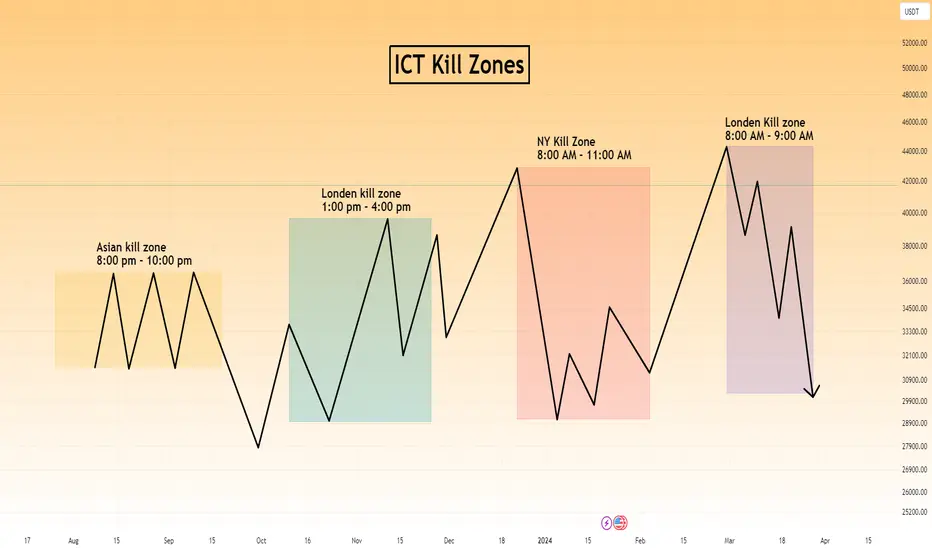
- 10:00 AM – 11:00 AM New York time: The primary Silver Bullet window. This is the first hour after the New York morning session has opened and the initial volatility from the open has settled. The algorithm frequently delivers a Silver Bullet setup during this window after establishing the morning directional bias.
- 2:00 PM – 3:00 PM New York time: The afternoon Silver Bullet window. This coincides with the early stages of the New York afternoon session and the transition from the midday doldrums into afternoon directional trading.
- 11:00 PM – Midnight New York time (or 1:00 AM – 2:00 AM): The overnight Silver Bullet window, relevant primarily for forex traders targeting pairs during the Asian session transition.
The Core Setup Mechanics
The Silver Bullet setup is built on three components: a liquidity sweep, a displacement move, and a Fair Value Gap. During the Silver Bullet window, price first sweeps liquidity — taking out a recent swing high or swing low. This sweep is the manipulation phase. Immediately after the sweep, a displacement move occurs in the opposite direction, creating a Fair Value Gap. This FVG is the Silver Bullet entry.
The sequence reads like this: price sweeps Buy-Side Liquidity (takes a swing high), then creates a bearish displacement that leaves a bearish FVG. You sell into that FVG. Or: price sweeps Sell-Side Liquidity (takes a swing low), then creates a bullish displacement leaving a bullish FVG. You buy into that FVG. The FVG created by the post-sweep displacement is your entry zone. The CE of the FVG is your specific entry point.
Step-by-Step Silver Bullet Entry Process
- Step 1 — Determine HTF Bias: Before the window opens, identify the daily bias. Is the institutional order flow bullish or bearish? Only take Silver Bullet setups that align with the daily bias.
- Step 2 — Identify the Liquidity Pool: Mark the most recent swing high (BSL) and swing low (SSL) on the 5-minute chart before the window opens.
- Step 3 — Wait for the Window: Do not enter before 10:00 AM. The Silver Bullet only operates within its defined windows.
- Step 4 — Watch for the Sweep: During the window, observe if price sweeps the BSL or SSL. For a bearish bias, you want a BSL sweep. For a bullish bias, you want an SSL sweep.
- Step 5 — Identify the FVG: After the sweep, a displacement candle (or series of candles) creates an FVG. Mark the gap between candle 1 high and candle 3 low (for bearish) or candle 1 low and candle 3 high (for bullish).
- Step 6 — Enter at the CE: Set a limit order at the 50% midpoint of the FVG (the Consequent Encroachment). This is your entry.
- Step 7 — Place Stop and Target: Stop above the FVG high for short entries, below the FVG low for long entries. Target: the nearest liquidity pool in the direction of the trade.
What Makes a Silver Bullet High Probability
Not every FVG during a Silver Bullet window is a Silver Bullet setup. The key qualifiers that elevate probability are: the setup aligns with the daily bias, the liquidity sweep is clean and decisive, the FVG is created by a genuine displacement (large-bodied candles, not small doji candles), and the entry is at the first FVG after the sweep — not a secondary or tertiary FVG.
The commonly discussed Silver Bullet setups occur when the daily chart shows a clear draw on liquidity and the Silver Bullet sweep is in the direction that aligns with that draw. For example, if the daily chart shows a clear draw toward the previous week's high (BSL on the daily), and the Silver Bullet window shows a sweep of 5-minute SSL followed by a bullish FVG, the two timeframes are aligned — the lower timeframe sweep collected sell-side liquidity before the higher timeframe delivery toward BSL continues.
Silver Bullet Risk Management
Risk per Silver Bullet trade should be defined before entry. ICT recommends never risking more than 1% of account per trade when learning. The Silver Bullet's tight stop structure (just above or below the FVG) typically allows for well-defined risk. When the setup is clean, R:R ratios of 3:1 to 5:1 are achievable by targeting the next significant liquidity pool.
One Silver Bullet per window. If you miss the setup or the first entry is stopped out, do not force a second entry during the same window. The Silver Bullet is one opportunity per window — quality over quantity is the discipline that makes this model work.
Worked hypothetical example
A trader selects a Silver Bullet window from the source they follow and marks the relevant liquidity reference before it begins. Price makes a sweep and then produces a candidate imbalance, but the retracement does not meet the trader’s entry rule before the window ends. The setup expires and is recorded as no trade.
Failure case and what to test
Fixed time windows do not guarantee a trade or predictive advantage. Timezone errors, changing volatility, inconsistent definitions and selective screenshots can make the model look cleaner in hindsight than it performs live.
Test checklist
- Specify timezone, session window and the source definition.
- Write sweep, confirmation, entry expiry and invalidation rules before testing.
- Compare qualifying windows with misses, losing entries and similar periods outside the window.
RELATED READING
Continue with guides selected for overlapping concepts and practical context.