ICT Scalping: Entries, Execution Costs and Risk Limits
A risk-first guide to applying chart-based ICT concepts on low timeframes, with explicit entry rules, realistic stop placement, spread and slippage assumptions, and after-cost review instead of fixed pip targets.
Framework note: ICT terms are interpretations of price action, not proof of institutional motives or a market algorithm’s intent. No setup is guaranteed. Test clearly defined rules, account for costs and slippage, and use risk limits before risking capital. Read our editorial policy.
ICT scalping applies selected chart rules to short timeframes. Fixed 20–50 pip targets are not appropriate for every instrument, and there is no basis here for calling particular time windows high probability; set targets and stops from a tested plan and actual instrument volatility.
Why ICT Scalping Works
Some ICT traders look for similar chart formations across timeframes, but their frequencies and outcomes need not scale identically. A five-minute FVG does not automatically carry the same significance or result as a four-hour FVG.
The ICT Scalping Setup
The ICT scalping setup is built on three components applied to the 1-minute or 5-minute chart during a Macro window: a liquidity sweep (stop hunt), a Market Structure Shift, and a Fair Value Gap entry. This is identical to the Silver Bullet or Venom model — just on a smaller timeframe with smaller targets.
- Step 1: Determine the 15-minute or 1-hour bias before your Macro window opens. What direction does the larger timeframe support?
- Step 2: At the Macro window open, mark the most recent 5-minute swing high (BSL) and swing low (SSL).
- Step 3: Wait for the sweep — price takes out the SSL (for a bullish scalp) or BSL (for a bearish scalp) during the window.
- Step 4: On the sweep candle or the next candle, watch for the reversal displacement on the 1-minute chart. This creates your 1-minute FVG.
- Step 5: Enter long (or short) at the CE of the 1-minute FVG on the first retracement.
- Step 6: Target: 20-50 pips or the next 5-minute liquidity pool. Stop: below the sweep low (or above sweep high). Max risk: 0.5-1% of account.
Best Pairs and Sessions for ICT Scalping
Spreads, liquidity, volatility and execution quality affect scalping costs, but a market or session is not universally most effective. Compare instruments using the same entry rules and include fees, slippage and missed fills in the results.
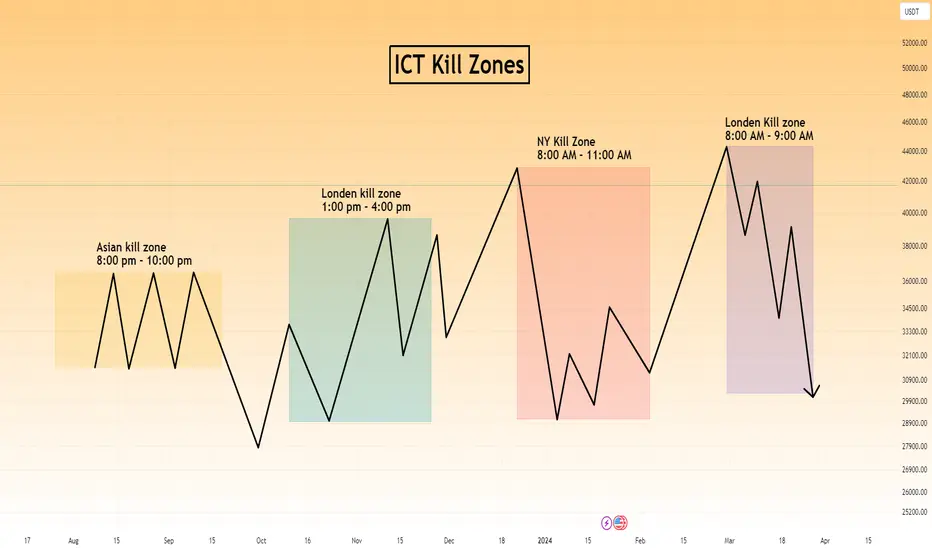
The 9:50-10:10 AM and 1:50-2:10 PM New York Macro windows produce the commonly studied ICT scalping setups. These windows are embedded within the broader Silver Bullet windows and offer the highest frequency of qualifying setups per week.
Risk Management for ICT Scalping
The difference between profitable ICT scalping and account destruction is discipline. Profitable ICT scalping means: maximum 3 attempts per session (if the first two setups fail, stop for the day), strict 0.5% risk per trade, clear pre-defined stop levels (no moving stops after entry), and no trading outside of Macro windows. The tight discipline framework is not optional — it is what makes the strategy viable.
ICT scalping is not for beginners. Before attempting to scalp with ICT concepts, you must be able to identify liquidity sweeps, Market Structure Shifts, and FVGs on the 1-minute chart in real-time with confidence. If you are still learning these concepts on the daily chart, spend at least 3-6 months there before moving to 1-minute scalping.
Worked hypothetical example
A hypothetical scalper compares two otherwise identical setups: one traded during a selected session and one outside it. They record entry, exit, spread, commissions, slippage and time exposed to the market. The point is to find whether the session filter changes measured results, not to assume a fixed number of pips is available each day.
Failure case and what to test
Frequent trades magnify costs and execution errors. A visually small stop may be smaller than a typical spread or may be hit by normal noise; high win rate alone also says little if occasional losses are much larger than wins.
Test checklist
- Calculate risk in account currency and include trading costs.
- Use a daily loss limit and stop at the plan's defined threshold.
- Compare after-cost results and avoid promises of fixed daily pips.
RELATED READING
Continue with guides selected for overlapping concepts and practical context.