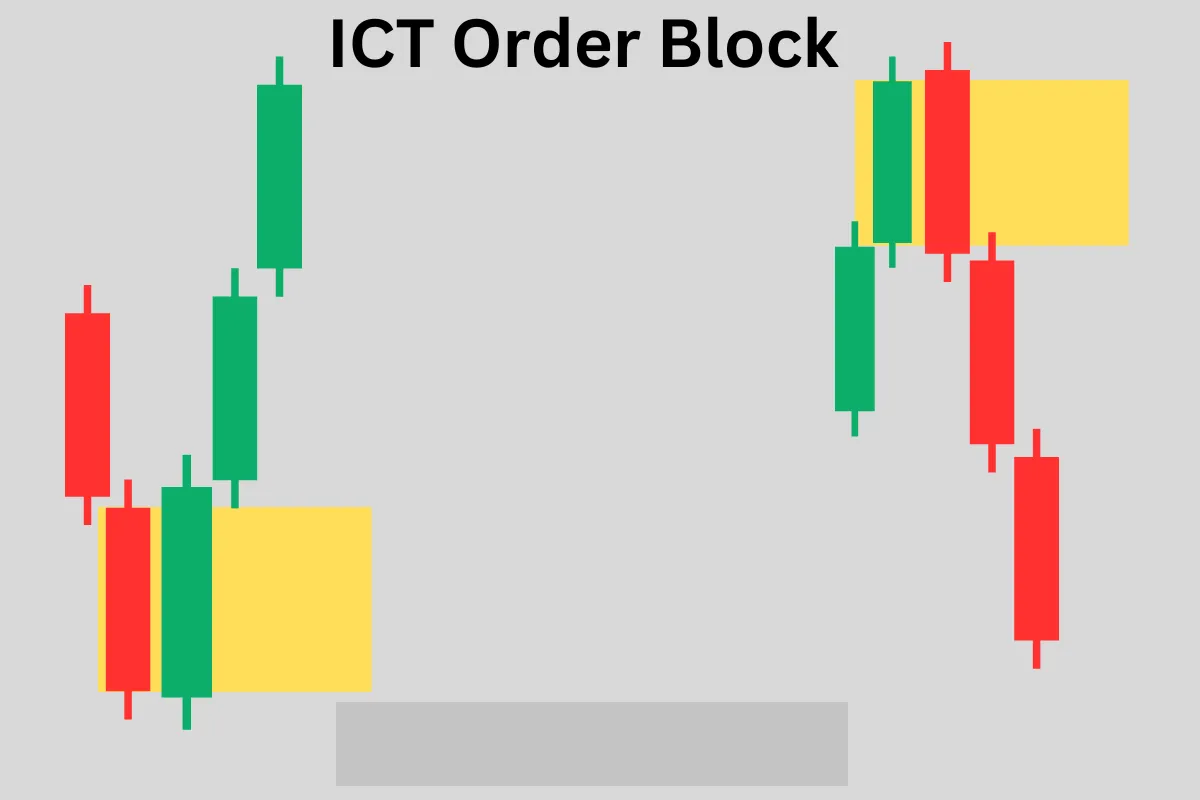
ICT Propulsion Block — The 2024 PD Array That Precedes Explosive Moves
The Propulsion Block is a 2024 ICT concept identifying a specific two-candle sequence that acts as the launch pad for the algorithm's commonly discussed displacement moves. Understanding it gives you entries right at the start of major moves.
Framework note: ICT terms are interpretations of price action, not proof of institutional motives or a market algorithm’s intent. No setup is guaranteed. Test clearly defined rules, account for costs and slippage, and use risk limits before risking capital. Read our editorial policy.
The ICT Propulsion Block is a PD Array concept introduced as part of the 2024 mentorship material. It identifies a specific candle or two-candle structure that appears immediately before a major algorithmic displacement move — the "propulsion" that launches the explosive delivery. The Propulsion Block represents the final institutional accumulation zone before a large impulsive move, and it becomes a reaction zone on the first return after the move.
What Is a Propulsion Block?
A Propulsion Block forms when the last one or two candles before a major displacement move show a very specific structure: a candle (or pair of candles) that closes at or near its extreme in the direction of the upcoming move, with minimal wick on the body side and the majority of the candle's range creating a gap (FVG) with the subsequent displacement candle.
In simpler terms: the Propulsion Block is the last consolidation candle before the big move. It is the algorithm's final compression before release. The candle looks unremarkable in isolation — it may appear to be just another candle in a range. But in the context of what follows it (the explosive displacement), it was the last moment of balance before institutional orders overwhelmed the market.
Identifying Propulsion Blocks
- Look back at any major displacement move on your chart. Find the candle immediately before the first large displacement candle.
- The Propulsion Block is typically: a candle with a small body that closes in the direction of the upcoming move, with minimal overlap with the subsequent displacement candle.
- The gap between the Propulsion Block candle's extreme and the displacement candle's start creates a micro-FVG — this is the propulsion zone.
- Mark the high and low of the Propulsion Block candle (or the two-candle structure if two candles form the block).
- This zone — the Propulsion Block range — becomes the reaction zone on the first return after the displacement move.
Trading the Propulsion Block
The Propulsion Block trade is a retracement entry after a displacement move. After the explosive displacement delivers price significantly beyond the Propulsion Block, wait for a retracement. The first retracement back to the Propulsion Block zone is your entry opportunity. This retracement represents price returning to the last consolidation point before the move — the area of maximum institutional intent.
Entry: a limit order at the midpoint of the Propulsion Block candle's range. Stop: just beyond the outer edge of the Propulsion Block (below the low for a bullish entry, above the high for a bearish entry). Target: the next significant liquidity pool beyond the displacement high (for bullish) or low (for bearish).
Propulsion Block vs Order Block — The Distinction
The Order Block is the last opposing candle before the move (the last bearish candle before a bullish move). The Propulsion Block is the last same-direction candle before the move amplifies (the last consolidation candle, which may actually be bullish, immediately before an even larger bullish explosion). They are adjacent concepts, and both often exist together: the OB precedes the Propulsion Block, and the Propulsion Block precedes the displacement.
The Propulsion Block is particularly powerful when it overlaps with an FVG or Order Block from the preceding sequence. When the Propulsion Block zone aligns with a prior OB and together they form the retracement entry zone, the confluence of three elements (Propulsion Block + OB + first return after displacement) creates one of the commonly studied entry structures in the entire advanced ICT toolkit.
Worked hypothetical example
For a hypothetical Propulsion Block rule, a trader identifies the required candle sequence using a single definition, records the resulting zone and then waits to see whether the predefined confirmation and retest occur. If the zone is never revisited, it remains a non-triggered candidate—not a missed guaranteed entry.
Failure case and what to test
The name can sound causal, but a plotted zone does not prove that it launched the move or that price will return. A definition selected after the fact makes nearly any favorable reaction look like confirmation.
Test checklist
- State the candle sequence and zone boundaries before replay.
- Separate pattern, confirmation, entry and exit rules.
- Measure reactions and failures with the same risk and cost assumptions.
RELATED READING
Continue with guides selected for overlapping concepts and practical context.