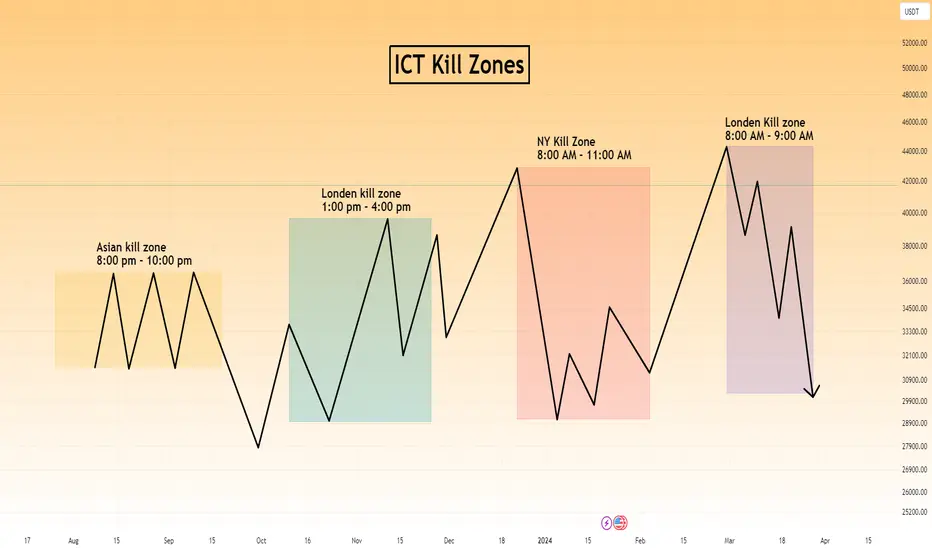
ICT Macro Times: Session Windows and Testable Conditions
Learn how some ICT traders use predefined intraday windows to observe sweeps or FVG revisits. Definitions can vary by source and instrument; test timing against a consistent baseline rather than presume algorithmic activity.
Framework note: ICT terms are interpretations of price action, not proof of institutional motives or a market algorithm’s intent. No setup is guaranteed. Test clearly defined rules, account for costs and slippage, and use risk limits before risking capital. Read our editorial policy.
Some ICT materials define Macro windows as selected intraday time intervals for observing price action. State the timezone and specific source convention used; the existence of a time window does not establish that an algorithm is more active or that a setup has an edge during it.
The 8 ICT Macro Time Windows (New York Time)
- 8:50 AM – 9:10 AM: Pre-market macro — occurs before the 9:30 AM NYSE open. Price often makes a final liquidity sweep before the opening range is established.
- 9:50 AM – 10:10 AM: Post-opening macro — the first significant move after the opening range forms. Many Silver Bullet setups originate from this window.
- 10:50 AM – 11:10 AM: Mid-morning macro — coincides with the end of the 10:00-11:00 Silver Bullet window.
- 11:50 AM – 12:10 PM: Noon macro — often produces a reversal or consolidation break after the midday period.
- 1:50 PM – 2:10 PM: Afternoon macro — precedes the 2:00 PM Silver Bullet window and frequently sets up the afternoon direction.
- 2:50 PM – 3:10 PM: Late afternoon macro — the last major window before the 3:00 PM close period. High volatility common.
- 3:50 PM – 4:10 PM: Market close macro — surrounds the 4:00 PM NYSE close. Final daily range resolution often occurs here.
- 11:50 PM – 12:10 AM: Midnight macro — relevant for forex traders. Often delivers the Asian session opening range.
What the Algorithm Does During Macros
During a Macro window, some ICT traders watch for a move through a nearby high or low, or a revisit to a Fair Value Gap. These are observation rules, not verified objectives of a market algorithm; price may do neither.
A testable hypothesis is that a nearby FVG or visible high or low may matter during a chosen Macro window. Record sessions where price moves away, continues through a level or does not revisit the gap rather than assuming the next window will deliver toward it.
Trading Macro Times — Practical Application
The practical application of Macro times is to focus your attention and your trade execution within these windows. Before a Macro window opens, identify the nearest PD Array in the direction of your HTF bias. Mark the nearest liquidity pool above and below. Then, as the Macro window opens, watch for a sweep of one liquidity pool followed by a displacement move toward your PD Array target.
Do not enter trades 5 minutes before a Macro window opens — these pre-window periods are often periods of directionless chop. Do not hold trades through a Macro if you are already in profit and the window could produce a counter-move. The Macro windows are both entry timing tools and exit timing tools.
Macros vs Killzones — Understanding the Relationship
Some ICT resources place Macro windows inside broader session windows, but clock definitions and daylight-saving handling should be stated explicitly. Treat the windows as time filters to evaluate, not verified periods of peak algorithmic or institutional activity.
Set calendar alerts on your trading platform for all 8 Macro times. For the first 30 days of practicing this concept, simply watch what happens during each window — do not trade, just observe. You will begin to see the pattern of liquidity sweeps and FVG fills that occur with some observed examples during these precise windows.
Worked hypothetical example
A trader chooses one 20-minute window from the educational framework they follow and records every qualifying setup for a month. In one instance, price sweeps a marked short-term low and then forms the trader’s predefined bullish confirmation. The entry is counted only if every written condition is met; the time window alone is not a signal.
Failure case and what to test
A window may look unusually effective in a small or selectively chosen sample. Timezone conversion, daylight-saving changes, instrument trading hours and economic releases can shift the apparent pattern, and activity inside a window does not prove algorithmic intent.
Test checklist
- Document the source, timezone and exact start/end times of each window.
- Track misses and losing setups alongside favorable examples.
- Compare results against similar periods outside the selected window after costs.
RELATED READING
Continue with guides selected for overlapping concepts and practical context.