ICT Inducement in Forex: Identifying and Testing the Concept
Learn how ICT traders label potential inducement around a swing or entry level, while separating chart interpretation from claims about deliberate market intent.
Framework note: ICT terms are interpretations of price action, not proof of institutional motives or a market algorithm’s intent. No setup is guaranteed. Test clearly defined rules, account for costs and slippage, and use risk limits before risking capital. Read our editorial policy.
Inducement in forex trading is the mechanism by which the algorithm deliberately creates apparent entry signals — setups that look technically valid — for the specific purpose of collecting the orders placed on those setups as liquidity before the real move begins. Every time you enter a trade that looks perfect according to your strategy and gets immediately stopped out before going in your direction, there is a good chance you were induced. Understanding inducement is the next level of ICT sophistication after mastering the core entry setups.
The Mechanics of Inducement
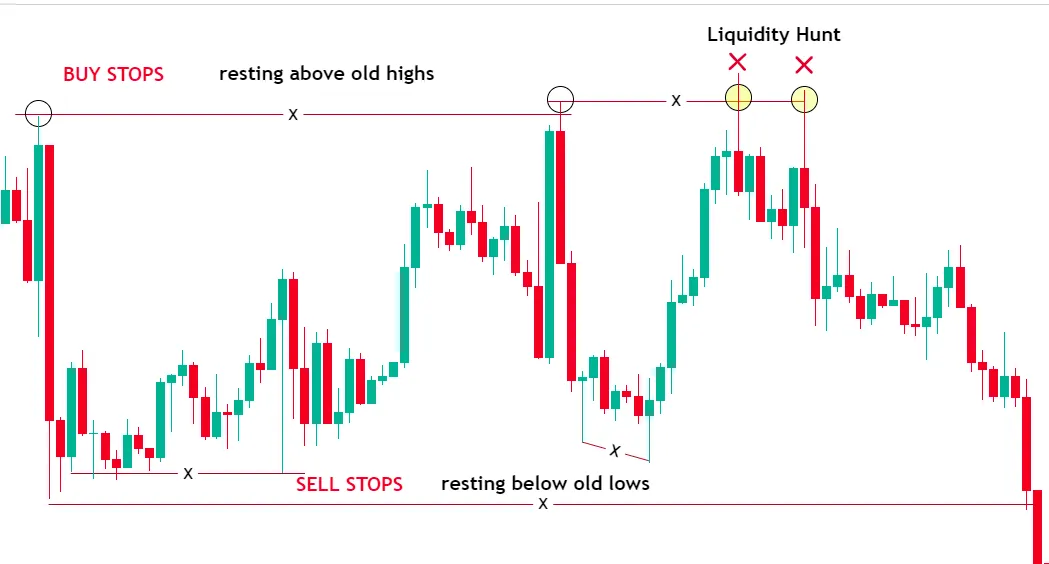
Inducement exploits the fact that retail traders trained in ICT methodology will place orders at predictable locations: below swing lows (for sell-stop entries) or above swing highs (for buy-stop entries), at Order Blocks, and at FVGs. The algorithm knows where these orders will be placed because the PD Arrays are visible to everyone who looks at the chart. The algorithm creates an apparent PD Array that attracts entries, collects those entries as liquidity, and then delivers to a deeper, more significant PD Array.
The induced trader: sees a bullish FVG on the 15-minute chart after a BOS. Enters long at the CE. Gets stopped out as price falls through the FVG. Then watches price rally from the 4-hour OB that was below their stop. They were induced by the shallow 15-minute FVG into entering too early, before the algorithm had finished its pullback to the deeper, more significant 4-hour zone.
Types of Inducement
Shallow Retracement Inducement: the algorithm creates a small pullback and a minor FVG that looks like an entry opportunity — but the true PD Array is much deeper. The shallow FVG is inducement for impatient traders.
BSL/SSL Inducement: the algorithm creates an apparent equal high or equal low — a visible liquidity pool — that seems like the target. Traders expecting a sweep and reversal from this level enter. But the algorithm uses this as inducement, sweeping it and continuing toward a larger, less obvious liquidity pool beyond.
Structure Inducement: the algorithm creates a minor ChoCH that makes it appear the trend has reversed — inducing counter-trend entries. Then the trend resumes, stopping out all the induced counter-trend traders before continuing in the original direction.
Avoiding Inducement — The Framework
- Ask: "Is there any liquidity between my entry and my target?" If yes — equal lows below your long entry, or equal highs above your short entry — the algorithm will likely sweep that liquidity first, inducing your stop before the true move.
- Ask: "Is my PD Array in the correct premium/discount context?" A bullish FVG in premium is likely inducement — wait for discount.
- Ask: "Is this the first and only PD Array in the retracement, or are there deeper ones?" If a significant 4-hour OB sits below the 15-minute FVG you are considering, the 4-hour OB is more significant — the 15-minute FVG may be inducement.
- Ask: "Has the algorithm swept the opposing liquidity first?" If no sweep of the opposing side has occurred, you may be entering during the Judas Swing (which is itself a form of inducement).
The commonly studied defense against inducement: only enter at the DEEPEST, MOST SIGNIFICANT PD Array in the retracement — not the first one price touches. The first PD Array is often inducement for impatient traders. The second or third PD Array, especially if it is on a higher timeframe and sits near the OTE zone, is where the true institutional reaction will occur. Patience to wait for the deeper, more significant zone is the anti-inducement discipline.
Worked hypothetical example
A trader marks a small swing low just above a larger range low and labels it a possible inducement reference. Price trades below the small swing, then continues lower through the larger range low. The label did not predict a reversal; it becomes one observation to compare against other examples.
Failure case and what to test
The term can become a story attached to any stop run after the fact. Without fixed swing rules and a measurable confirmation, one trader may call a move inducement while another calls it ordinary volatility.
Test checklist
- Define the relevant swing and the event that qualifies as a sweep.
- Record continuation and reversal outcomes using the same rule.
- Avoid inferring who intended to trap whom from candles alone.
RELATED READING
Continue with guides selected for overlapping concepts and practical context.