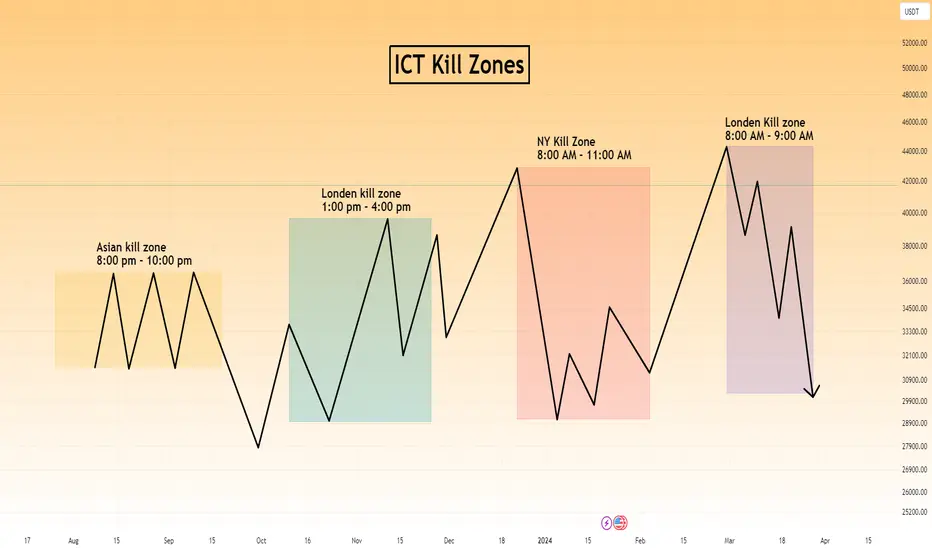
ICT Central Bank Dealers Range (CBDR): A Session-Range Framework
A practical look at the CBDR as a defined session range, including measurement choices, possible breakout scenarios and ways to test the idea without assuming it predicts the day.
Framework note: ICT terms are interpretations of price action, not proof of institutional motives or a market algorithm’s intent. No setup is guaranteed. Test clearly defined rules, account for costs and slippage, and use risk limits before risking capital. Read our editorial policy.
The Central Bank Dealers Range (CBDR) is one of ICT's time-based tools that uses the overnight low-volatility period to define the day's accumulation range. When price eventually breaks out of the CBDR, it signals the beginning of the day's true directional delivery — and the size and nature of the breakout tells you whether to expect a large or small daily range.
What Is the CBDR?
The CBDR is the price range formed between 2:00 PM and 8:00 PM New York time — the period after the New York session closes and before the Asian session reaches full participation. During this window, the major institutional participants (the central bank dealing desks and their associated market makers) are either winding down for the day or managing overnight inventory. The price range they create during this window is the CBDR.
This 6-hour window is characterized by relatively low volatility and tight ranging price action. The high and low of this range represent the outer boundaries of the accumulation phase. When London opens and begins directional delivery, price will typically break out of the CBDR and move decisively in one direction.
Using the CBDR for Daily Range Forecasting
ICT teaches that the size of the CBDR has a direct relationship to the expected daily range. A narrow CBDR (small range, compressed price action) indicates accumulation of significant institutional orders — price is coiling before a large release. A wide CBDR (large range, volatile overnight action) suggests a more contained, lower-energy directional day is likely.
- Narrow CBDR: expect a large daily range once the breakout occurs. The London or New York session will likely deliver a significant directional move.
- Wide CBDR: expect a smaller, more contained daily range. The breakout will still occur, but the move is likely to be more modest.
- Mark the CBDR high and low before each London session opens.
- When price breaks above the CBDR high during the London Killzone with a decisive displacement candle, bias is bullish for the session.
- When price breaks below the CBDR low during the London Killzone, bias is bearish for the session.
The Asian Range and CBDR Interaction
The CBDR and the Asian Range overlap and interact. The Asian session (midnight to 6:00 AM London time) occurs within and extends beyond the CBDR. The Asian range high and low are often used interchangeably with the CBDR boundaries, though technically the CBDR begins at 2:00 PM New York and the Asian range begins at midnight New York.
What matters practically is that the combined zone created by the overnight low-volatility period establishes the day's range boundaries that London will then seek to break. Mark both the CBDR boundaries and the Asian session high/low, and watch for the London session to sweep one side before delivering in the other direction — the classic London Turtle Soup setup operates directly from the CBDR/Asian range extremes.
The CBDR is a daily planning tool — it is most useful when incorporated into your pre-session routine. Before London opens each day, mark the CBDR range. Note whether it is narrow or wide. This immediately calibrates your expectation for the day's potential range and helps you size targets appropriately. Large CBDR = modest day; small CBDR = potentially large day.
Worked hypothetical example
A hypothetical trader marks a defined overnight range before the London and New York sessions. Price breaks above the high, briefly returns inside the range and later makes another high. A rule that required a close back inside would log a breakout-and-return event, but any later entry still needs its own confirmation and risk rule.
Failure case and what to test
The range does not predict the day's direction by itself. Range size, news, instrument, daylight-saving transitions and broker/session definitions can affect the measurement. Choosing start and end times after seeing price introduces hindsight bias.
Test checklist
- State timezone and session boundaries, including daylight-saving handling.
- Record breaks that continue as well as those that return inside.
- Test the range as context separately from the actual entry trigger.
RELATED READING
Continue with guides selected for overlapping concepts and practical context.