ICT Breaker Block — What It Is and How to Trade It
A Breaker Block is a failed Order Block that flips polarity. Once you understand why it forms and what it means, it becomes one of the cleanest entry tools in the ICT framework.
Framework note: ICT terms are interpretations of price action, not proof of institutional motives or a market algorithm’s intent. No setup is guaranteed. Test clearly defined rules, account for costs and slippage, and use risk limits before risking capital. Read our editorial policy.
The ICT Breaker Block is one of the commonly studied entry tools in the entire ICT framework — yet it is widely misunderstood by traders who treat it as just another support/resistance concept. A Breaker Block is not simply a zone. It is the result of a specific structural failure, and that failure is exactly what makes it powerful.
What Exactly Is a Breaker Block?
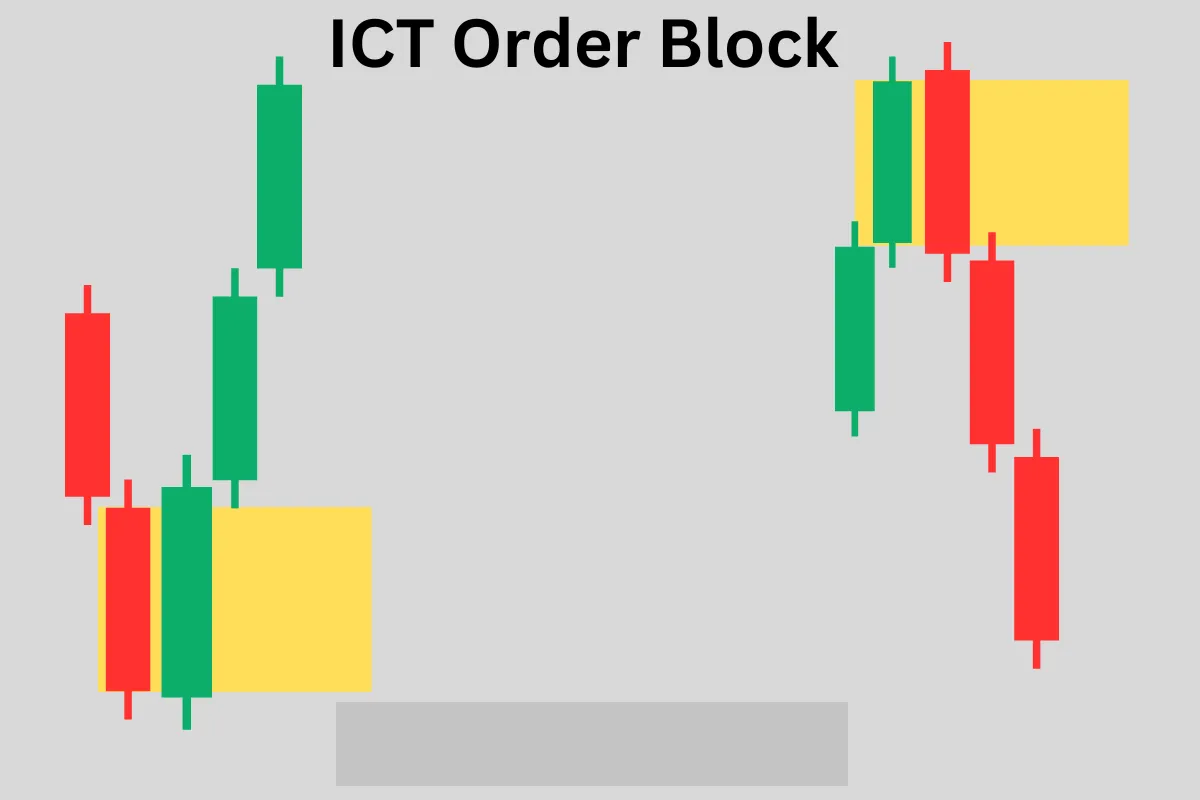
A Breaker Block forms when an Order Block fails. An Order Block is the last opposing candle before a significant move — the last bearish candle before a bullish impulse, or the last bullish candle before a bearish impulse. When price returns to an Order Block, it typically reacts and continues in the original direction. However, when price breaks through the Order Block entirely — when the OB fails — that broken OB becomes a Breaker Block.
The failed bullish Order Block becomes a bearish Breaker Block. The failed bearish Order Block becomes a bullish Breaker Block. The polarity flips. What was once a zone of buying becomes a zone of selling, and vice versa. This flip happens because the institutional orders that were in that zone have now been offloaded — the smart money used the return to the OB to exit, not to enter, and then continued driving price through the zone, breaking it.
The Three-Step Formation Process
- Step 1 — An Order Block forms: Identify the last bearish candle before a bullish swing, or the last bullish candle before a bearish swing. Mark this zone as an Order Block.
- Step 2 — Price returns to the OB and breaks through: Instead of respecting the OB and reversing, price sweeps through the entire zone without holding. The OB has failed.
- Step 3 — The Breaker Block is established: The failed OB is now a Breaker. On the first return to this zone from the other side, price should treat it as the new resistance (failed bullish OB) or new support (failed bearish OB).
Why Breaker Blocks Work — The Institutional Logic
When an Order Block fails, it does not fail randomly. The institutions that placed orders at that level have now cleared their positions. They used the retail buying at the OB as an exit opportunity. Price then continues aggressively through the zone, taking out stop losses and trapping traders who bought expecting the OB to hold.
When price returns to that broken zone, the dynamic has completely reversed. The zone that previously attracted institutional buyers is now abandoned by them. Instead, it becomes a zone of institutional selling — the new short-term resistance. Retail traders who are long from below will be exiting near this level; institutional traders who are now short will be adding to their positions. Both actions create selling pressure at the Breaker Block.
Bullish vs Bearish Breaker Blocks
A Bullish Breaker Block forms when a bearish Order Block fails. This happens in a bullish market when price retraces into what appears to be a bearish OB but instead blows through it, taking the sell-side liquidity below. When price then rallies back up through that zone, the bearish OB has become a bullish Breaker — it now acts as support on the retest.
A Bearish Breaker Block forms when a bullish Order Block fails. In a bearish market, price returns to a bullish OB and instead of bouncing, smashes through it, taking out all the buy-stop orders above. When price then returns to that zone from below, the bullish OB has flipped into a bearish Breaker — acting as resistance on the retest.
Trading the Breaker Block — Entry Model
The cleanest Breaker Block entry occurs at the first retest after the flip. Once you have identified that an OB has failed and price is now returning to that level from the new direction, wait for price to enter the Breaker zone. Look for a lower timeframe reaction — a displacement move away from the Breaker on the 1-minute or 5-minute chart — as your entry confirmation.
Stop placement goes just beyond the Breaker Block — below it for a bullish Breaker, above it for a bearish Breaker. The target is the next liquidity pool in the direction of the trade. Risk-to-reward ratios of 3:1 or better are common with Breaker Block entries because the stop is well-defined and tight.
Breaker Block vs Mitigation Block — The Key Difference
Traders often confuse Breaker Blocks with Mitigation Blocks. The distinction is important. A Mitigation Block is simply a failed Order Block that has not yet been retested from the new direction — it is waiting to be mitigated. A Breaker Block is what that Mitigation Block becomes after price has returned to it and the polarity flip has been confirmed. In practice: the Mitigation Block is the concept; the Breaker Block trade is the entry.
The commonly discussed Breaker Block setups occur when the failed OB is in alignment with the higher timeframe institutional order flow. A bearish Breaker Block in a bearish HTF structure is a potential setup — the failure of the bullish OB confirms the bears are fully in control.
Worked hypothetical example: log a breaker candidate
A trader marks a bearish order-block candidate between 75.20 and 75.50. Price closes above 75.50 and later retests the band from above. The trader records a bullish breaker candidate only if the definition requires that close and a retest within a fixed horizon. If price falls back through 75.20, the setup is marked invalid rather than relabeled as another block.
Failure case and what to test
The original block may break without a useful retest, or the retest may continue through the zone. Different educators use different boundaries and confirmation rules, so an undefined visual label is difficult to backtest reliably.
Test checklist
- Define the original block and the close required to invalidate it.
- Specify the retest horizon and entry confirmation.
- Record no-retest, failed-retest and continuation cases.
- Compare performance after costs with the underlying setup without the breaker label.
RELATED READING
Continue with guides selected for overlapping concepts and practical context.