ICT First-Presented FVG: A Session-Based Hypothesis
Learn how traders define the first qualifying Fair Value Gap after a chosen session open, record missed retests and compare the rule with later gaps without assuming the first gap determines direction.
Framework note: ICT terms are interpretations of price action, not proof of institutional motives or a market algorithm’s intent. No setup is guaranteed. Test clearly defined rules, account for costs and slippage, and use risk limits before risking capital. Read our editorial policy.
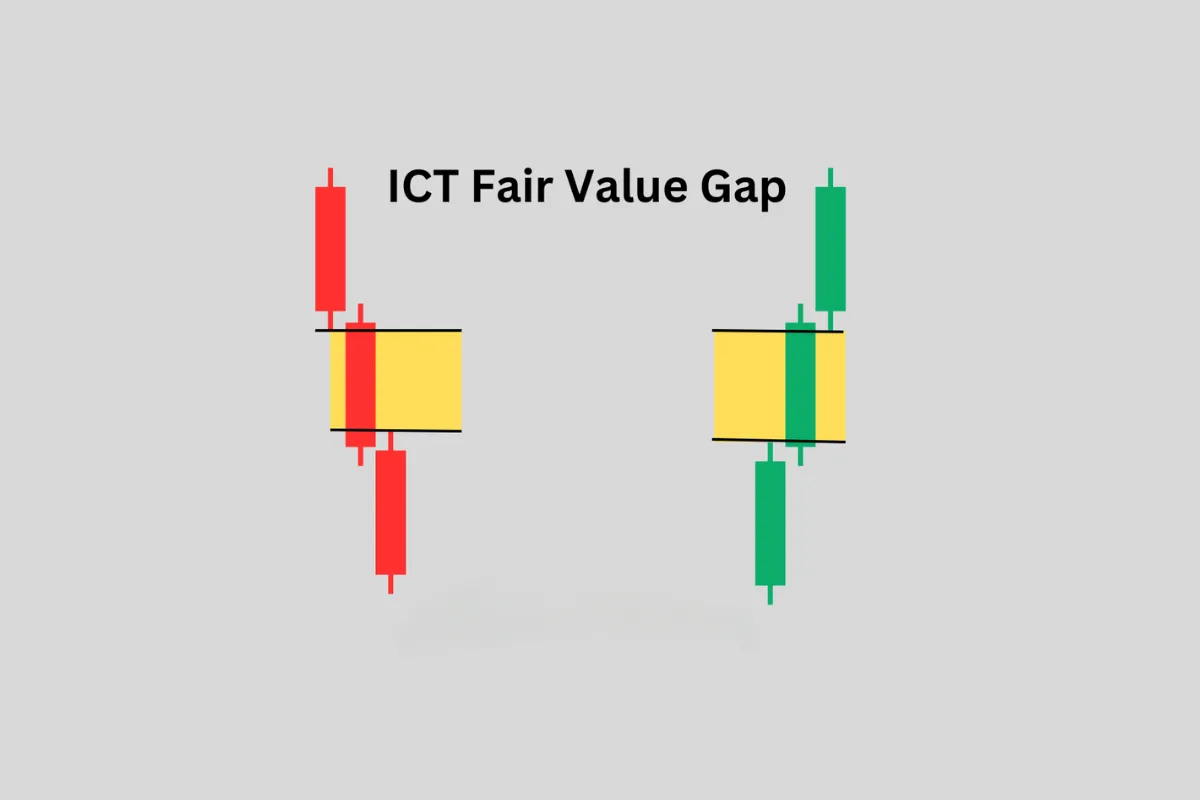
A first-presented FVG is a rule that selects the first gap meeting a defined three-candle criterion after a chosen session open. Its timing does not establish institutional significance or make it a primary target for an algorithm.
The Opening Range and Why It Matters
The Opening Range is defined as the price range established in the first 30-60 minutes after the 9:30 AM NYSE open. During this window, institutional orders that accumulated overnight and during the pre-market session are being executed. The high and low of the opening range represent the initial extremes of this execution, and they become liquidity pools that the algorithm will seek during the rest of the session.
A trader can define the first qualifying FVG by choosing the session-open timestamp, timeframe and gap rule in advance. The first gap does not reveal an algorithm's directional commitment, and price may continue, reverse or never revisit it.
How to Identify the 1st Presented FVG
- At 9:30 AM New York time, switch to the 5-minute chart and watch for the first displacement move after the open.
- The displacement should consist of 2-4 large-bodied candles moving strongly in one direction — either immediately up (bullish opening) or immediately down (bearish opening).
- Within this displacement sequence, identify the three-candle FVG formation: the high of candle 1 must not overlap with the low of candle 3 (for bullish) or vice versa (for bearish).
- The first FVG that appears in this initial displacement is the 1st Presented FVG. Mark it clearly.
- If multiple FVGs form in the opening displacement, the first one (closest to the 9:30 AM open) is the 1st Presented FVG. Mark each subsequent one separately.
Trading the 1st Presented FVG
After the 1st Presented FVG forms, you have two trading opportunities. The first opportunity is the most common: price continues in the displacement direction for some time, then retraces back into the 1st Presented FVG during the opening range period (typically 10:00-10:30 AM). This retracement into the FVG is your entry — at the CE, with a stop below the FVG (for longs) or above it (for shorts), targeting the opening range high or low.
The second opportunity is the opening range breakout trade: if price does not retrace to the 1st Presented FVG but instead continues beyond the opening range high/low, the FVG becomes a reference level for the pullback trade after the initial breakout. In both cases, the 1st Presented FVG is your primary reference level for the opening 90 minutes of the trading session.
The Opening Range High and Low as Targets
The opening range high and low (the extremes of the first 30-60 minutes) are the primary liquidity targets of the opening session. If your 1st Presented FVG is bullish and the daily bias is bullish, your target from the FVG entry is the opening range high — and potentially beyond to the previous day's high. If the FVG is bearish, your target is the opening range low.
The 1st Presented FVG is the single most important FVG to mark each trading day. Before doing anything else during the opening range, identify and mark this FVG. It will be a reference level for your opening range trades, for your Silver Bullet setup later in the 10:00-11:00 window, and for understanding the day's initial institutional order flow direction.
Worked hypothetical example
A trader specifies the exchange opening time, the timeframe and the rule for identifying the first qualifying FVG after the open. On one session, the first gap appears but price never retraces into it before the session window ends. The example is logged as a no-entry case rather than substituting a later gap.
Failure case and what to test
The result changes with the chosen opening time, market session, timeframe and gap definition. A first gap may be crossed cleanly, while a later gap may behave differently; importance cannot be assumed from sequence alone.
Test checklist
- Fix the session, timeframe and qualifying-gap rule in advance.
- Record no-retrace, full-cross and partial-fill cases.
- Compare the first qualifying gap with later gaps and a simple opening-range baseline.
RELATED READING
Continue with guides selected for overlapping concepts and practical context.